
 |
 |
 |
 |
Overview: What happens when you achieve everything you thought would make you happy and realize it still isn’t what you were looking for?
Omani Carson started what would become Carson Group from a college dorm room with a negative net worth of roughly $2,600.
Years later, when he began working with Mark Moses, Carson Group was managing approximately $3 billion in assets. Omani told Mark he wanted help getting to $5 billion.
Mark challenged him to add a zero.
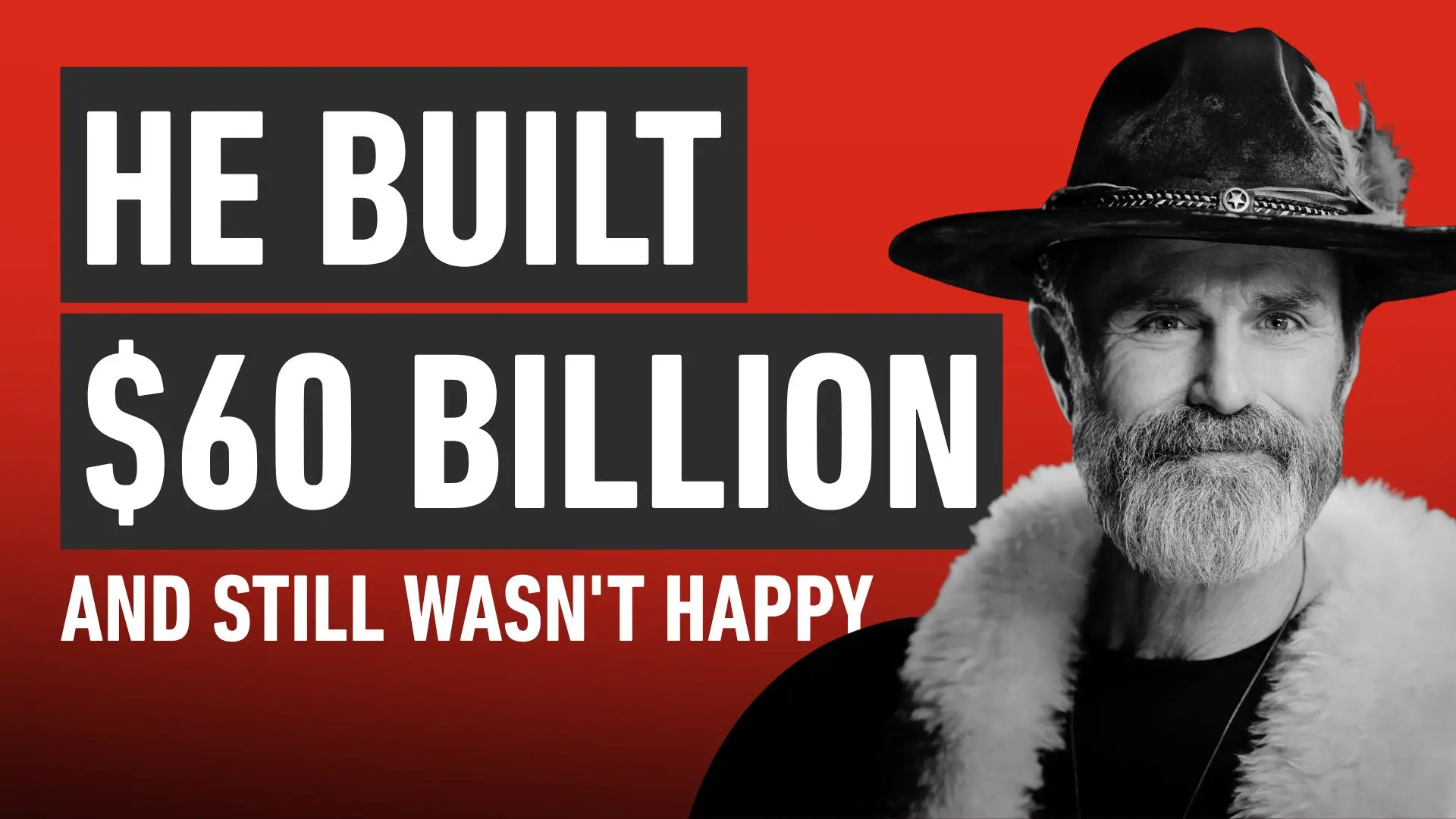
That challenge helped change the way Omani thought about what was possible. During their conversation on the Make BIG Happen Podcast, Omani said Carson was on track to reach $60 billion in assets under management within roughly 30 to 45 days and that he believes the firm could eventually reach $1 trillion.
But the biggest transformation Omani described wasn’t the growth of the business.
It was his own.
For much of his life, Omani was driven by fear, scarcity, and an intense desire to succeed. He set ambitious goals, built systems around achieving them, and pushed himself relentlessly.
It worked.
But when he reached the financial milestones he thought would give him a feeling of freedom and security, he said the feeling wasn’t there.
Throughout the conversation, Omani shared how his childhood shaped his ambition, why thinking exponentially changed the trajectory of Carson, what he learned about hiring the very best people, why handing over the CEO role was harder than he expected, and how his evolution from Ron to Omani changed the way he thinks about success, relationships, and abundance.
Success Won’t Necessarily Give You What You’re Chasing
Omani’s drive started long before he built a successful company.
When he was 17, his parents went broke and lost everything.
Omani remembers his father telling him he needed to find something else to do because he couldn’t even support the family. He also remembers seeing his father cry: something Omani said he had never seen before.
The experience, he said, “seared my soul.”
A few weeks later, Omani found a Money magazine article listing certified financial planner as one of the top professions.
He decided that was what he would do.
More importantly, he made a vow to himself:
He would never be poor.
Omani says he spent years chasing the feeling he believed financial security would eventually give him.
But when he reached the numbers he thought would create that feeling, it wasn’t there.
He kept exceeding them.
He kept adding another one.
And eventually, he began recognizing the difference between the way he had lived as Ron and the way he wanted to live as Omani: moving from a fear-and-scarcity mindset toward what he describes as abundance.
Key Takeaway: Know what you’re really chasing. Hitting the number doesn’t guarantee it will give you the feeling you expected.
Think Exponentially, Not Incrementally
When Omani and Mark began working together, Carson was managing approximately $3 billion in assets.
Omani wanted to reach $5 billion.
Mark pushed back.
Why not add a zero?
Omani remembers Mark challenging him to think about what would have to change to reach $50 billion instead.
That changed how he thought about the business.
Instead of viewing decisions through the lens of getting from $3 billion to $5 billion, Omani began thinking about what would be required to build something exponentially larger.
He began asking whether decisions and investments could support a business 100 times its current size.
That influenced the infrastructure Carson built and the investments the company made in areas such as data and technology.
During the podcast conversation, Omani said Carson expected to reach $60 billion in assets within approximately 30 to 45 days.
His next vision is even bigger.
Omani believes Carson can become a trillion-dollar RIA within the next 20 years.
He credits Mark with helping him shift from linear to exponential thinking.
Key Takeaway: A BIGGER goal forces you to ask different questions and make different decisions.
Live Your Life by Design, Not by Default
When Mark first met Omani, one of the things that fascinated him was Omani’s habit of putting his goals in the shower.
Omani laminated them so they wouldn’t get wet.
He even carried another laminated copy when he traveled so he could review his goals in hotel rooms and on airplanes.
He would consciously go through them and ask whether he was on target or off target.
Every night before bed, Omani also identified the six most important things he needed to accomplish the next day, including the single most vital one, and considered how those activities connected to his larger goals.
His planning extended far beyond the next quarter.
Each year, he looked 20 years out, then 15, 10, five, three, and one.
That discipline became part of his blueprinting process.
Omani describes its purpose simply:
Live your life by design, not by default.
He believes many people aren’t clear about what they’re trying to accomplish, what matters most to them, or what is most alive for them right now.
Blueprinting was his way of answering those questions intentionally.
Key Takeaway: Get clear about what you want, then connect what you do every day to where you actually want to go.
Hire the Best — and Be Willing to Share
When Mark asked Omani about one of his biggest mistakes, Omani pointed to something he once believed he was already doing well:
Hiring the absolute best people and getting out of their way.
Looking back, Omani realized he hadn’t gone far enough.
He says he was still operating from fear and scarcity and couldn’t bring himself to pay what it would take to bring in the very best people.
Today, he thinks differently.
Omani encourages business owners to find people among the very best in their fields — whether that’s marketing, HR, legal, strategy, or technology — and “pay up for the best.”
That can also mean sharing equity.
Omani said Carson now has more than 60 owners. He also said Bain came into Carson at a valuation north of $1 billion and that, at the time of the podcast conversation, the company was valued at approximately $3.9 billion.
For Omani, the experience changed the way he thinks about ownership.
Would you rather own 100% of something little or part of something massive?
He also believes ownership can help great people operate differently because they participate directly in the results they create.
Key Takeaway: Don’t let protecting your percentage keep you from building a much more valuable company.
When You Hand Over the Reins, Actually Hand Them Over
At a certain point, Omani decided he was ready to step down as CEO.
He wanted to spend more time focused on what he considers his core competencies: strategy and telling the Carson story.
Bain supported the transition, and Carson ultimately brought in Burt White, whom Omani had known for 14 years and who had worked for Carson’s biggest competitor.
Burt first joined Carson as Chief Strategy Officer before Omani turned over the CEO role.
But Omani quickly discovered that saying you’re ready to let go and actually letting go are two different things.
He described the transition using the image of handing Burt the steering wheel.
Omani handed it over.
Then, as soon as Burt put his hands on it, Omani put his hands back on too.
It wasn’t fair to Burt.
And it was driving Omani crazy.
Eventually, Omani decided to trust the process and let go.
He says Burt has been amazing in the role and that the business was “actually operating better.”
Omani also had to confront his own reaction to no longer being the CEO in the headlines.
When the financial press began referring to CEO Burt White rather than CEO Omani Carson, Omani asked himself whether what he was feeling was ego.
His answer was yes.
Key Takeaway: If you’re going to give someone the reins, you have to actually let them lead.
The Biggest Transformation Wasn’t the Business
Mark remembers an earlier version of Omani as intensely driven.
All in.
All the time.
Omani agrees.
When he was focused on his goals, he says he didn’t have time for small talk. He wasn’t interested in talking about the weather or asking about someone’s kids.
He wanted to get directly to the point and move to the next meeting.
Behind that intensity, Omani says, was a feeling he kept chasing like a proverbial pot of gold at the end of a rainbow.
Then his mother died when he was 50.
Omani said she was the one person he knew loved him unconditionally.
He hit a low point.
He and his wife, Jeannie, separated for a period.
And Omani began looking much more deeply at himself.
He told Mark that, looking back, he doesn’t think he truly knew what love was until he was 50. He didn’t know how to love or even like himself. Despite everything he had accomplished, he sometimes felt undeserving of his success and like a fraud.
Over the years that followed, Omani began working on what he describes as self-love and moving from fear and scarcity into an abundance mindset.
He says it changed the way he interacts with people.
Today, he remembers people’s kids.
He asks about their vacations.
He enjoys conversations with people he meets.
It’s a profound change from the man who once considered those conversations distractions from his goals.
Key Takeaway: External achievement doesn’t automatically create internal fulfillment. The leader behind the business needs attention too.
From Ron to Omani
Omani’s transformation eventually became visible in something very personal:
His name.
Through his work with Indigenous leaders, Omani said he was bestowed the name Tate Omani, which he translates as “walking into a stiff wind.”
He began going by Omani.
Eventually, he legally changed his name.
For him, the distinction between Ron and Omani represents the larger change he had experienced.
He describes Ron as intensely focused, highly accountable, impatient with incompetence, and driven to accomplish.
Omani says he still has high expectations.
What changed is the way he communicates, relates to people, and approaches his life.
When Mark asked who Omani is that Ron wasn’t, Omani talked about being secure in his friendships, trusting his friends and his own instincts, and caring deeply about the impact he can have on other people and the world.
Key Takeaway: Growth isn’t only about becoming capable of achieving more. It can also mean changing how you experience the success you’ve already created.
If It’s Not a Yes, It’s a No
Omani sees another major difference between how he operated earlier in his career and how he operates today.
Ron, he says, was always selling.
Omani describes his approach now as “attraction over promotion.”
That philosophy also shapes how he and Jeannie decide where to invest their time.
When they consider an opportunity, they use a simple filter:
If it’s not a yes, it’s a no.
Omani says he applies the same thinking to relationships and the people he chooses to spend time with.
It’s a very different operating system from the one he used when every available moment was focused on achieving the next goal.
Key Takeaway: Be intentional about where you invest your time, energy, and relationships.
Final Thought
Near the end of the conversation, Mark asked Omani what he would tell CEOs around the world.
His answer was surprising coming from someone who spent decades operating with extraordinary intensity:
“If you really slow down, you can speed up.”
Omani believes CEOs need to spend time working on themselves.
He talks about being “selfish to be selfless,” investing in yourself so you can increase your capacity for everything and everyone else around you.
His message to CEOs is to build deeper relationships, take time to connect, and work on themselves rather than directing every ounce of energy toward achievement.
Omani believes doing so has allowed him to experience more abundance, have more fun, and accomplish more with less struggle.
And he has one piece of advice for leaders who recognize themselves in the way he used to operate:
Don’t wait as long as he did.
“Don’t wait till you’re 50 like I did. Start that process earlier.”
Omani’s story is ultimately about more than taking a business from billions in assets toward something exponentially bigger.
It’s about discovering that the person building the business can evolve too.
The ambition doesn’t have to disappear.
The standards don’t have to come down.
You can still Think BIG.
You can still Make BIG Happen.
But you can change the way you experience the journey.
Key Takeaway: Sometimes slowing down and working on yourself is what gives you the capacity to accomplish more.
Listen to the full Make BIG Happen Podcast episode with Omani Carson.
About CEO Coaching International
CEO Coaching International works with CEOs and their leadership teams to achieve extraordinary results quarter after quarter, year after year. Known globally for its success in coaching growth-focused entrepreneurs to meaningful exits, the firm has coached more than 3,500 CEOs and senior leaders across 160+ industries and 94 countries. Its coaches—former CEOs, presidents, and executives—have led businesses ranging from startups to over $10 billion, driving double-digit sales and profit growth, many culminating in eight, nine, or ten-figure exits.
Companies that have worked with CEO Coaching International for two years or more have achieved an average revenue CAGR of 22.8%, nearly 2X the U.S. average, and an average EBITDA CAGR of 37.5%, nearly 3X the national benchmark.
Discover how coaching can transform your leadership journey at ceocoachinginternational.com.
Learn more about executive coaching | Meet our world-class coaches