

5 CEO Blind Spots Holding You Back
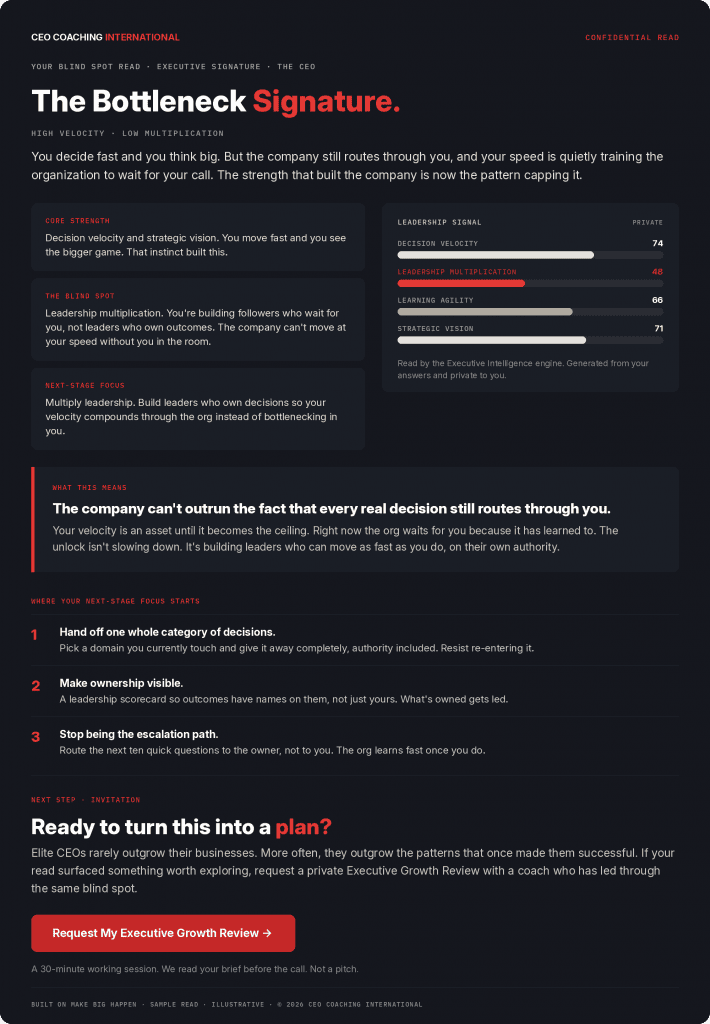
Everyone has their weaknesses. But when you are CEO, a blind spot could mean the difference between barely breaking even and major growth.
The problem with blind spots? As the name implies, we’re often not aware of what they are, even if we can see the damage they’re doing to the business.
“The more aware we can be of our blind spots as leaders, the better we can connect and work effectively with others,” says CEO coach Chris Braun. “Blind spots can have a real deep impact, both professionally and personally.”
It’s challenging to identify and fix blind spots yourself. One of the first things our CEO coaches do when they work with a new client is work to find those blind spots, whether they’re related to your previous work experience, your personality, or your organization. When we asked our coaches the most common blind spots, here’s what they said:
1. Overconfidence that hurts your team dynamics
“The first, and what I see most often, is leaders that come off as though they know everything,” says Braun. “There’s a difference between being confident and being overconfident, where your team feels like they can’t engage with you.”
It’s a common misconception that a boss should tell people what to do. But if you’ve hired the right people, then they should tell you what the team should do. When you find yourself being prescriptive, think, “What questions should I be asking?”
The ideal team does know more than you do about their areas of expertise. You may have come up through the sales organization, but if you’ve been CEO for more than a year, your head of sales is going to know more about what’s working right now. “If your team isn’t yet better than you at their areas, then your job is to figure out how to tap into your team to get them there,” adds Braun.
2. People issues that keep your business from growing
Which leads us to the second most common blind spot: The wrong people in the wrong seats.
Often, the skillsets that got you to one stage of growth won’t translate to the next phase. With people, you get into all sorts of blind spots, especially if they’re hardworking, loyal, and have been at the company for many years.
“We tend to settle for someone who is doing a reasonably good job versus a great job,” says Braun. “The question to ask yourself here is, ‘If I have somebody that’s, say, a six, what would the difference be in my business if they were a nine or a ten?”
When you do find an under performer, take action immediately. That doesn’t mean fire everyone, but evaluate what they need to grow—more training, another layer of management, a lateral move, or yes, letting them go. You can give them another chance, but don’t wait too long.
“My biggest blind spot is making decisions on people,” admits CEO Coach Scott White. “Over the course of my career, the number of times I thought I could make it work, it’s been a real learning lesson for me.
You can never fire someone too fast. Make decisions as soon as you know you have a problem.”
3. A closed-off attitude that prevents great teamwork
When you show up to a meeting, do you already have an opinion ready to go?
Try to listen more to your team, advises Braun. “When you don’t allow others to participate, you’re going to miss some of the best ideas your company can come up with. Ask yourself, ‘How do I open up more?’”
You have a wealth of experience available to you at your executive team table. Start by asking questions, and then listen to what they have to say. You may be surprised what comes out of it.
Your team may disagree with each other, or with you, but that’s a good thing, says Braun. “These other perspectives are so valuable,” he says. “The folks going in a different direction are going to help you make a stronger decision that improves your business. I used to take it defensively when someone disagreed with me, especially in an important setting, like a board meeting. Sometimes that pressure is actually just the pressure you need to find a way forward. That’s what’s going to help your team grow.”
4. Overanalyzing every decision leads to burnout
The average adult makes 35,000 decisions every day. CEOs are doing even more. There’s a reason Steve Jobs famously wore his black tees every day—to prevent decision fatigue.
“If you look back at the last six or twelve months, what are some decisions you delayed for one reason or another?” asks Braun. “These delays are often because of analysis paralysis. You’re overanalyzing the issues and avoiding confrontation, which is slowing you down.”
This is the opposite of the blind spot about overconfidence. Instead of confidently heading down a disastrous path, this blind spot means the CEO is unwilling to make the wrong choice, and by doing so, creates a crisis anyway. “You must have the courage to make that tough call,” he says. “The tougher it is, the quicker you need to make it. Don’t make your team wait it out to find out about layoffs, for example, or hiring for a critical role.”
5. Failing to include external perspectives
Bringing in your internal team to your decision-making process is just the start. If you’re struggling with a specific issue, ask an expert. Don’t miss out on external perspectives, whether that’s from mentors, peer groups, or by hiring a coach.
“As coaches, we work with a lot of CEOs and founders to understand how to utilize their skills and work around their blind spots because they want to improve as a leader,” explains Braun. “It’s our job to uncover those for our clients and help them work through it.”
We all have blind spots. If you’re curious what could be holding you back, our coaches will find them, and help you work through them.
A coach can help you shift your mindset.
Our coaches have led companies from startup to nine and ten-figure exits. Book a 30-minute session with someone who has actually been in your seat.