

The #1 Issue Coaches See? People.
The #1 issue that our coaches see again and again? Your team.
Getting the right people in the right seats can be one of the most challenging aspects of growth to get right. Take a moment and think about your leadership team. On a scale of 1-10, how many are truly top performers?
“I’ve never had a CEO tell me that everyone on their team is a 10,” says CEO Coach Keith Corrigan.
Part of the issue is that someone who may be an 8 or 9 when your business is at $50 million may not be the right person to take your business to $150 million. In this post, we’ll talk about how to evaluate your team more effectively—and how to hire top performers that will take your organization to the next level.
1. First, evaluate your team’s strengths and weaknesses
The reason a team member might not be hitting that 8,9,10 number may have nothing to do with their talent and everything to do with their seat. To figure out what’s really going on, we recommend running a two-part TTI Assessment on every member of the team:
- DISC analyzes behavioral style. How do you best interact with your peers?
- Driving Forces addresses your motivation. Why do you show up to work every day?
Together, you can get a much better picture of your team members and what roles suit them as people first.
CEO Coach Edward Hughes recalls working with an executive who was frustrated with their sales organization. They felt like they were doing everything to incentivize new business instead of existing accounts, but when they dug deeper, they found out it was actually a people problem. “Most of their salespeople were very relationship-oriented, not biz dev oriented,” he says. “A new business development person needs to be a hunter, they need to have the resilience to be told no a hundred times. So it was like putting square pegs in round holes, with the CEO saying the same thing every quarter. They needed to separate the existing accounts team and the new business team and make sure they had the right people in each spot.”
2. Hire for tomorrow, not for today
Even if you have a great team right now, they may not be the people that can take you to where you want to go.
You want to hire a mix of skills that complement your own strengths and weaknesses. These should be smart, competent team members who can get the job done as well (or better, ideally) than you can.
As you bring in new team members, be consistent about your interview process to prevent bias from creeping into your assessment. The idea is to evaluate both competency and culture fit, with situational leadership-style questions like:
- Why do you want this role? What is your ideal job?
- Why do you want to work here, specifically, at this organization?
- What were some challenges you faced in X role and how did you break through them?
- Tell me about a time when you disagreed with a coworker about a high-stakes situation. How did you handle it?
- Tell me about a time when you weren’t aligned with your boss. How did you know? And how did you achieve that alignment with them?
- Where do you think you can add the most value here?
- Describe what a successful team environment looks like for you.
Says Hughes:
“I’m trying to judge if there’s a fit with the organization I’m running, rather than telling them here’s the job and what it’s going to be. Can I take this person who is already a successful person and put them in my organization so they can be successful right away, or will I need to adapt everything in my organization? You need to understand who they are and how they operate.”
3. Most importantly, trust your team
A high-performing team is made up of A-players, sure. But more than that: They trust one another.
You have to create genuine connections between your team to get the kind of cohesiveness, communication, and accountability that you need to grow BIG. They need to care about one another beyond who they are at work…which means you have to lead by example, trusting them to get it done.
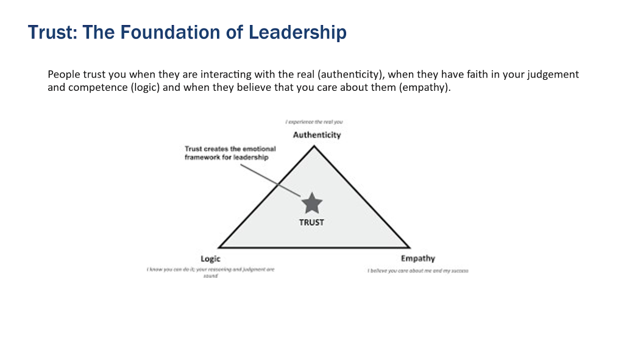
Building trust requires three main elements:
- Authenticity: Is your team able to express themselves authentically?
- Logic: Do they have faith in each others’ judgment and competence?
- Empathy: Do they believe that you care about them?
You need all three to be successful.
While many leaders think of “high performance” as a cutthroat, do-what-it-takes culture, it’s actually the teams that have a culture of kindness, compassion, and caring that are most successful. A study from Babson College found that companies that promoted a culture of collaboration were five times more likely to be high-performing.
Says Hughes, “The best leaders inspire. Empower your leadership team to think strategically, act boldly, and collaborate effectively for sustained performance.”
A coach can help you get the right people in the right seats
If you’re looking to max out your growth, you may be looking too much at your numbers and not enough at your people.
Our coaches can help you through assessing your leadership team—and yourself—to understand how you can best work together. Then, they can guide you through building a culture of accountability and collaboration that takes the potential of your A-players and multiplies it.
If you have questions or just want to connect with someone who knows what you’re going through, schedule a complimentary, no-obligation coaching session today. Get started >
Connect With a Coach:
About CEO Coaching International
CEO Coaching International works with CEOs and their leadership teams to achieve extraordinary results quarter after quarter, year after year. Known globally for its success in coaching growth-focused entrepreneurs to meaningful exits, the firm has coached more than 3,500 CEOs and senior leaders across 160+ industries and 94 countries. Its coaches—former CEOs, presidents, and executives—have led businesses ranging from startups to over $10 billion, driving double-digit sales and profit growth, many culminating in eight, nine, or ten-figure exits.
Companies that have worked with CEO Coaching International for two years or more have achieved an average revenue CAGR of 22.8%, nearly 2X the U.S. average, and an average EBITDA CAGR of 37.5%, nearly 3X the national benchmark.
Discover how coaching can transform your leadership journey at ceocoachinginternational.com.
Learn more about executive coaching | Meet our world-class coaches