


How CEOs Can Use Jim Collins’ Flywheel to Drive Long-Term Growth
All CEOs dream about one BIG moment that will catapult their company to the next level: a must-have product reveal, a splashy acquisition, a viral marketing explosion, a long-term contract with a major customer.
But a key to lasting success isn’t capturing lightning in a bottle. It’s a series of consistent, cumulative actions that reinforce each other and create unstoppable forward momentum.
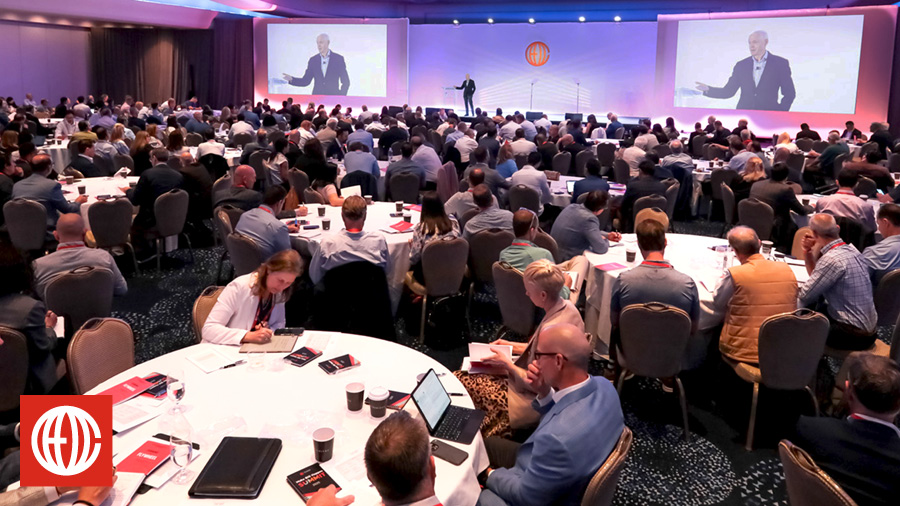
Jim Collins discussed this “Flywheel Effect” when he delivered his keynote address at the 2025 CEO Coaching International Make BIG Happen Summit. In a world where the rules of business seem to be changing every day, a flywheel could provide the steady heartbeat your company needs to shrug off surprises and stay on course for BIG.
“The Flywheel Effect”
In his books “Good to Great” and “Turning the Flywheel,” Jim Collins asks CEOs to imagine a gigantic metal disk mounted on an axel. He said in creating a good-to-great transformation, it:
“Feels like turning a giant, heavy flywheel. Pushing with great effort, you get the flywheel to inch forward. You keep pushing, and with persistent effort, you get the flywheel to complete one entire turn. You don’t stop. You keep pushing. The flywheel moves a bit faster. Two turns…then four…then eight…the flywheel builds momentum…sixteen…thirty two…moving faster…one thousand…ten thousand…one hundred thousand. Then at some point–breakthrough! The flywheel flies forward with almost unstoppable momentum.”
Eventually, momentum takes over, and even though you aren’t “pushing” any harder than you did the first time, the flywheel is spinning faster and faster all by itself: increasing productivity, compounding output, strengthening culture, and accelerating your company’s trajectory.
“Never ever underestimate how far a great flywheel can go,” Jim Collins said.
In our experience coaching CEOs, tariffs, inflation, and supply chain interruptions could skip right off a high-speed flywheel while the company continues its steady progress. Shiny distractions vanish. Small wins snowball, building camaraderie, trust, and winning habits. And consistent achievement creates clarity around what your company does best and how to do more of it.
The Blueprint of a Great Flywheel
Every company’s flywheel is unique, but these are some characteristics in common:
- Clear Purpose: Collins emphasizes the importance of clarity through the Hedgehog Concept—knowing what you’re best at, most passionate about, and what drives your economic engine. Anchoring your flywheel in mission and values provides the emotional and strategic clarity that fuels sustained effort.
- Aligned Actions: All daily, measurable actions should have a logical, sequential progression so that everything the company does builds momentum for the next task. This is “discipline in action” according to Collins.
- Measurable Results: Collins emphasizes empirical rigor. Nothing should be in your flywheel that you can’t empirically show actually works.
- Feedback Loops: Incorporate real-time feedback via AI, data, and team dialogue to improve precision and power with each turn of the flywheel. This aligns with Collins’ idea of calibrated learning in which companies learn, adapt, and refine while maintaining consistency in direction.
- Creative Intensity and Relentless Discipline: To keep your flywheel turning, you must always maintain “creative intensity and relentless discipline.”
How to Build Your Company’s Flywheel
Here are a few key steps to build your company’s flywheel according to Collins:
1. Review What Works and What Doesn’t Work
Take an inventory of your firm’s past replicable successes and failures. What are the threads in there that could be the core of a successful flywheel?
2. Identify the Sequence
Based on your successes, sketch out the flywheel. Then test it against your past successes and failures. Can you empirically support the flywheel? Each item on the flywheel should logically flow such that you can say, “If we do X, we can’t help but achieve the next component.”
3. Test Your Flywheel Against the Three Circles of Your Hedgehog Concept
As Collins says, “Does the flywheel fit with what you’re deeply passionate about–especially the guiding core purpose and enduring core values of the enterprise? Does the flywheel build upon what you can be the best in the world at? Does the flywheel help fuel your economic or resource engine?”
Jim Collins’ personal flywheel illustrates these five concepts in action. At each turn of the crank are specific verbs that lead from one action to the next. At the top of Collins’ flywheel is his guiding passion, flanked on the right by the pushes he makes, and on the left by the fuel that propels the next spin.
What’s Grinding in Your Flywheel?
If your flywheel isn’t generating enough self-propelling momentum check for:
1. Weak links.
“The flywheel is only as effective as your weakest link,” Jim Collins said, “so job one is to improve your weakest link.”
2. Unnecessary complexity.
Simple steps lead to clear guidelines for execution and accountability. The easier it is to get your flywheel moving, the easier it will be to keep it spinning.
3. Useless Novelties
Don’t get distracted. Focus on optimizing what you do best.
4. Impatience
“You do not need a miracle moment,” Collins said, “you need a coherent sequence of steps that accumulate.”
5. Poor internal communication.
Every employee should understand how the flywheel turns, what KPIs it’s driving, and what their role is in the next rotation.
Make Your BIG Push
Patience, discipline, and strategic alignment might feel like luxuries that CEOs can’t afford right now. But reacting to a rapidly changing business landscape doesn’t mean grasping for quick fixes. Just as a stable base of top talent can help your company maintain flexibility, a strong culture, and creativity, a flywheel can keep everyone focused on the things you can control to get the results you want.
Step back from what feels urgent and start optimizing what’s most important to your company’s success. With proper planning, your next BIG push could start building the momentum you need to Make BIG Happen.
If you don’t have a coach and want one to help you prepare your business during this quickly evolving landscape, fill out the form below to take us up on a complimentary 1:1 coaching call.
Connect With a Coach:
About CEO Coaching International
CEO Coaching International works with CEOs and their leadership teams to achieve extraordinary results quarter after quarter, year after year. Known globally for its success in coaching growth-focused entrepreneurs to meaningful exits, the firm has coached more than 1,500+ CEOs and entrepreneurs across 100+ industries and 60 countries. Its coaches—former CEOs, presidents, and executives—have led businesses ranging from startups to over $10 billion, driving double-digit sales and profit growth, many culminating in eight, nine, or ten-figure exits.
Companies that have worked with CEO Coaching International for two years or more have achieved an average revenue CAGR of 25.9%, nearly 3X the U.S. average, and an average EBITDA CAGR of 39.2%, more than 4X the national benchmark.
Discover how coaching can transform your leadership journey at ceocoachinginternational.com.
Learn more about executive coaching | Meet our world-class coaches