



|

|

|

|
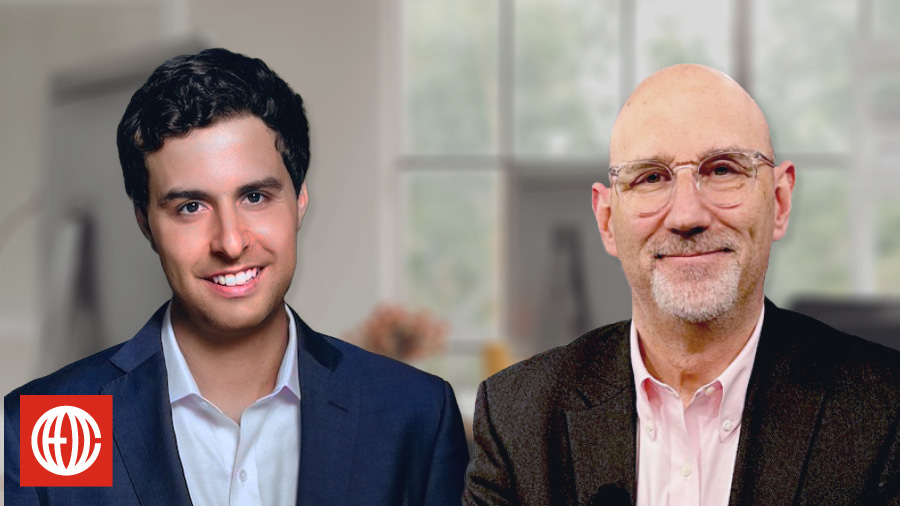
Guest: Michael J. Slater, a coach at CEO Coaching International. Michael is a longtime YPO member who co-founded and served as the CEO of Nik Software, an international software startup in digital photography that he co-founded and led to a $200M+ valuation before ultimately selling to Google.
Quick Background: Every great company begins with a dream. But turning that dream into a reality requires more than just vision. It requires a defined process and an inspired team that rallies the whole company around the leader’s BIG goals.
On today’s show, Michael J. Slater explains how his process of “Dreaming Backwards” can establish the principles and strategy CEOs need to Make BIG Happen.
Keys to Dreaming Backwards from Michael J. Slater
Step 1: See Your “Envisioned State.”
Dreaming Backwards begins with the end in mind: an “Envisioned State” of your company’s ideal future.
“Oftentimes it’s the CEO plus a small part of the executive team that looks at, where does the company want to be?” Michael J. Slater explains. “Or where do you want the company to be within a period of time, which could be three years or five years? And it’s an aspirational process that really looks at what is that future state.”
More than just numbers on a spreadsheet, your Envisioned State should be a clear and compelling visual representation of your vision as CEO.
The CEO’s Envisioned State should also include metrics that allow you to track, measure, and manage your progress, as well as a rolling period of evaluation and goal-setting so that each achievement points towards the next.
“Your Envisioned State needs to be aspirational, it needs to be practical, and it also has to have some sort of quantitative component to it,” Michael says. “At Nik Software, part of the Envisioned State was to create a shareholder value of $100 million. And so that was also a way to evaluate the other components of the Envisioned State. What do we need to get to the $100 million valuation? Those aspects may change over time, but the $100 million valuation is always there, and there is almost always key components that remain consistent as part of the Envisioned State.”
Step 2: Establish Your “Guiding Principle.”
Once you can see where you’re going, your company will need a compass to keep you heading in the right direction.
“A Guiding Principle is a statement that aligns the entire organization towards the Envisioned State,” Michael J. Slater explains. “It rallies the entire team around what is important on the path to the Envisioned State. It’s what guides decision-making and it’s what energizes the team. If this guiding principle doesn’t energize people, then it’s really difficult to get to an Envisioned State and to actually execute.”
The Guiding Principle at Nik software was, “Act like Apple, be better than Adobe.” Michael says this idea not only energized his entire team but also aligned every level of the company. While every department had its own specific goals and every employee had their own specific responsibilities, following the Guiding Principle created consistency in everything the company did and maintained progress towards the Envisioned State.
However, just like your Envisioned State should always have an eye towards the future, your Guiding Principle shouldn’t be so dogmatic that it locks your company in place. Just think about Kodak, a company that was too focused on its film business to see the digital future — despite inventing the first digital camera in 1975.
“It’s really challenging to create an envisioned state without having an open mind for growth and change or innovation,” Michael says. “That’s where Kodak fell off the rails.”
Step 3: Lay Out “Strategic Strands”
Following your Guiding Principle might lead you towards more than one path to BIG. Each of these “Strategic Strands” will have its strengths and weaknesses. One might carve the quickest path to your Envisioned State by itself. Or, the CEO might need to weave more than one Strand together to broaden strategic options, allow for pivots, and improve the company’s probability of success.
At Nik Software, the Envisioned State included creating world-class software. “ We set a standard,” Michael explains. “To measure that, we had to go out and see who could we hire in our home base of Germany that met our standards. And what was surprising was our head of engineering was not able to find everyone that he needed that met the standard. So now we had to look at different options for engineering, and that led us to different Strategic Strands.”
Strand 1: Continue recruiting aggressively in Germany.
Strand 2: Create an overseas development team in another location.
Strand 3: A combination of both.
Michael and his head of engineering kept iterating Strand 3 until they landed on a process that was consistent with the company’s Guiding Principle and pointing towards the Envisioned State.
“We recruited from Romania, India, and Pakistan,” Michael says, “and we set up a department in the company to build the team in Germany. Part of the Strategic Stranding included a three-to-five-year plan that looked at developing engineers from different countries and building a team within our team that would eventually move back to their country and build what we considered an organically developed engineering team. Therefore it wasn’t just outsourcing and it wasn’t keeping everything in one team in Germany. It was a combination of the Strategic Strands that led us to that.”
It’s also noteworthy that while Michael was plotting Strands across current barriers to his Envisioned State, he never stopped thinking BIG. That combination of practicality, rigorous review, and an inspiring vision is how CEOs build on today’s wins to create sustainable growth.
“In CEO Coaching International terms, Huge Outrageous Targets can be overlaid over an Envisioned State,” Michael says. “What has to happen though is there has to be an iterative process of reviewing the steps or the specific and measurable activities on a regular basis in order to reach that HOT, that Envisioned State. They’re both a picture of the future that defines, in objective terms, what the future looks like and what everyone is aiming for.”
Top Takeaways
1. Dream BIG and inspire your team to do the same.
2. Stick to your principles and they’ll lead you towards your long-term goals.
3. Assess your options and assemble a strategy that’s practical, flexible, and ambitious.
About CEO Coaching International
CEO Coaching International works with CEOs and their leadership teams to achieve extraordinary results quarter after quarter, year after year. Known globally for its success in coaching growth-focused entrepreneurs to meaningful exits, the firm has coached more than 1,500+ CEOs and entrepreneurs across 100+ industries and 60 countries. Its coaches—former CEOs, presidents, and executives—have led businesses ranging from startups to over $10 billion, driving double-digit sales and profit growth, many culminating in eight, nine, or ten-figure exits.
Companies that have worked with CEO Coaching International for two years or more have achieved an average revenue CAGR of 25.9%, nearly 3X the U.S. average, and an average EBITDA CAGR of 39.2%, more than 4X the national benchmark.
Discover how coaching can transform your leadership journey at ceocoachinginternational.com.
Learn more about executive coaching | Meet our world-class coaches